Skip main navigation
Close menu
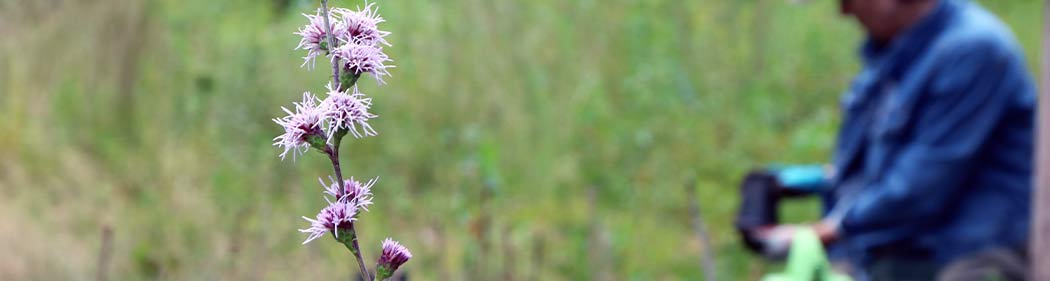
New England blazing star

New England Blazing Star

Wildflower and Native Pollinator Conservation

Native pollinator species are on the decline due to habitat loss. We're helping to bring back rare wildflowers on conservation land around Middlesex county.

Zoo New England is committed to One Health, which is the concept that the health of people and society are inextricably linked to the health of plants, animals, and our shared environment. The Field Conservation Department conducts our pollinator restoration projects with this collaborative and holistic ethos: we partner with the Arnold Arboretum and dozens of other non-profit organizations (including schools!) to grow, plant, monitor, and manage rare wildflowers with vital ecosystem implications. 

We specialize in a suite of wildflowers that thrive in sandy, nutrient-poor soils.These dry-soil meadows have become vanishingly rare in Massachusetts, a falling domino with a suite of negative implications. Restoring the right plant to the right place slows erosion, provides carbon sequestration, stems the spread of invasive species, and supports vital pollinator populations, all with little to no continued maintenance and no increased need for watering. 

The gorgeous New England blazing star, considered a Species of Greatest Conservation Need and a Species of Special Concern in Massachusetts, is one of our featured wildflowers. The New England blazing star was once widespread throughout its range and its late fall bloom is vital for pollinators, especially for monarch butterflies fueling up for a long migration south.

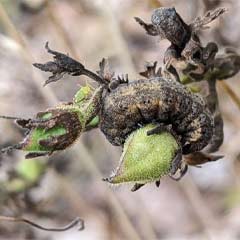
Since 2017, we've been coordinating, conducting, and publishing active, iterative science in our quest to develop best practices and protocols for the restoration of this plant, and we’ve been very successful, with many of our reintroduced populations firmly established, self-seeding and increasing! We conduct similar programs for several plants specifically to support rare moth and butterfly species that depend exclusively on them, including yellow wild-indigo and wild lupine for frosted elfin butterflies, New Jersey tea for New Jersey tea inchworm moths, and fern-leaved false foxglove for orange sallow moths.

New England blazing star fact sheet

Featured Field

Our largest actively managed site is a nearly five-acre wildflower meadow in Concord, MA. Known as Peter Spring Field, the meadow is a robust thicket of wildflowers and a bulwark of the local ecosystem, supporting nesting habitat for Blanding’s turtles, refugia for native pollinators and other animals, and popular foraging space for songbirds. In 2017, supported by a grant from the Concord Garden Club and with the assistance of Hutchins Farm, we initiated the project by removing ecologically useless cover crops and seeding the area with a custom wildflower and grass mix. In 2020, we planted additional patches of rarer native species within the meadow. 

We’ve conducted annual surveys since 2020, and the field is flourishing! Among the more widespread flower species are oxeye sunflower, lance-leaved coreopsis, wild bergamot, showy tick trefoil, tall evening primrose, common milkweed, partridge pea, black-eyed susan, daisy fleabane, and rattlebox. We recorded a substantial population of a small moth species, the ornate bella moth (Utetheisa ornatrix), whose larvae depend on the relatively rare legume, rattlebox. This moth had been regarded previously as extirpated from Massachusetts. We also observed the first blooming of the rare native butterfly milkweed (Asclepias tuberosa). Overall, we’ve recorded more than 100 unique plant species in the field, some of which are rare natives that were established without direct intervention (i.e., through natural dispersal!)  In warm weather, the field is abuzz with bees, birds, dragonflies and beetles– a testament to its popularity with local pollinators. 

How Can I Get Involved?

Encouraging native plants is one of the biggest impacts you can have on the natural world! By planting native wildflowers in your backyard or encouraging others to do so, you can help provide habitat for both declining native wildflowers and their paired pollinators. You’ll be joining thousands of others in the movement to create a Homegrown National Park! We encourage you to check out the Xerces Society for ideas on what native plants you can plant in your backyard to help pollinators in your area.

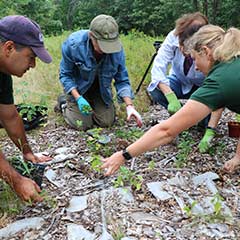
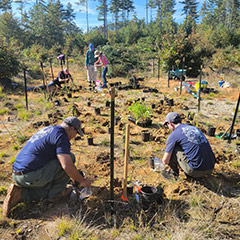
Conservation takes a village, and we work with towns, organizations, and volunteers to collect, germinate, plant and monitor these vital wildflowers. We may be working somewhere near you! Join our Conservation Society to hear about volunteer and learning opportunities.