Diet:
Brazilian cockroaches are omnivores and scavengers. They eat bat guano, fruit, seeds, decomposing plant matter, dead insects and even rotting wood.
Reproduction:
While courting a female, a male will raise his wings and begin shaking his abdomen. Males will fight over females, sometimes to the death. Once a male and a female mate, the female’s eggs are incubated for about 60 days. Cockroach offspring are called nymphs. They reach sexual maturity around 8 months of age.
Behavior:
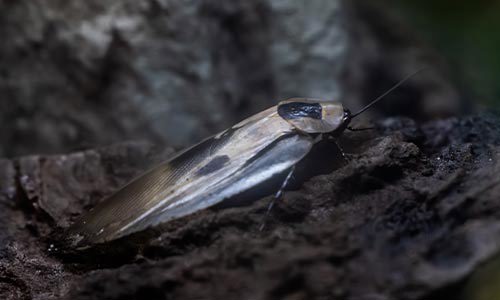
Brazilian cockroaches “see” and feel their surroundings using leg bristles and antennae. These bristles and antennae help them sense their environment in dark spaces. Their flat bodies enable them to hide in crevices and underneath rocks. These cockroaches have three distinct stages in their lifecycle: egg, nymph and adult. They don't have wings until they reach the adult stage.
Habitat/Range:
Central America including Costa Rica and Panama, down to northern Brazil in South America. Like most species of cockroaches, Brazilian cockroaches like to live in damp and dark places. They can be found in caves, tree hollows, and beneath loose tree bark. They can sometimes even be found in houses.
Median Life Expectancy:
Up to 20 months.
Threats in the Wild:
Like many species of insects, Brazilian cockroach habitats are threatened by rainforest destruction.