
Wood Turtle Conservation
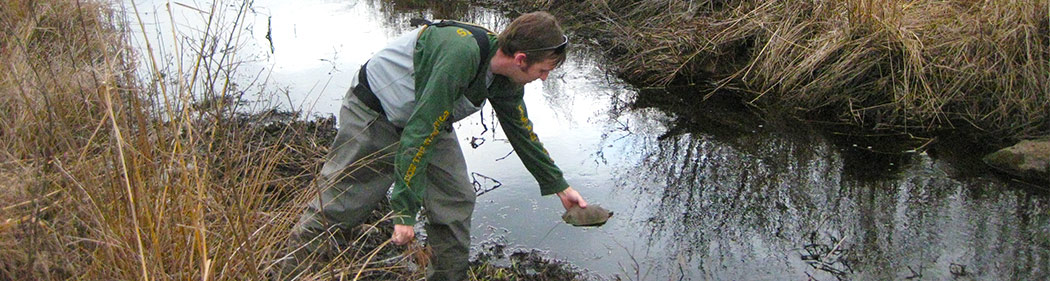
Once the most common freshwater turtle in eastern Mass, the wood turtle is now state threatened. We've been studying these turtles since 2012, protecting nests, restoring habitat, and finding innovative solutions to reverse population declines.
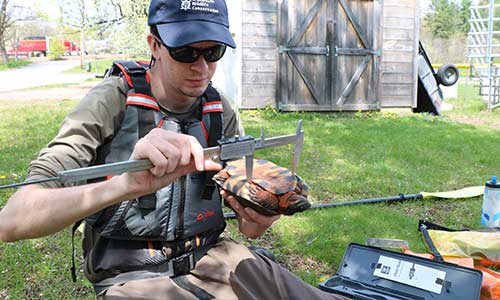
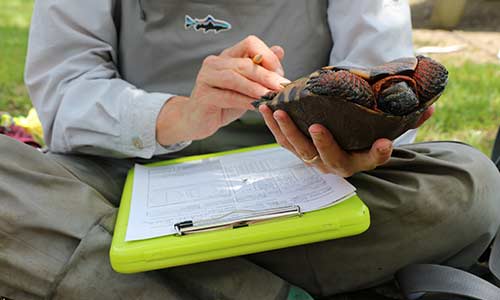
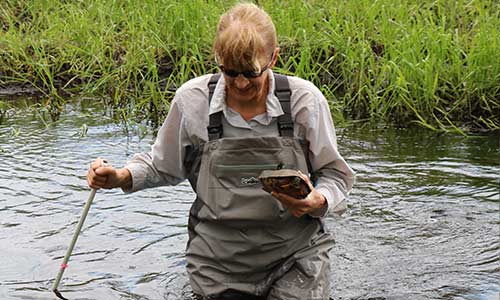
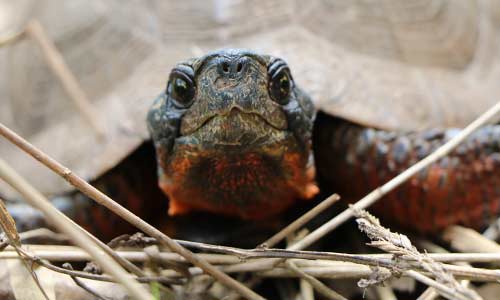


Zoo New England’s Field Conservation Department has been monitoring small, isolated populations of wood turtles (Glyptemys insculpta) around eastern Massachusetts since 2012.The wood turtle was once the most common freshwater turtle in eastern Massachusetts. Now wood turtles are listed as a species of Special Concern in Massachusetts and listed as endangered on the IUCN redlist.
We track wood turtles to better understand their movement patterns, habitat use, and survival rates. We're also protecting their nests from predators, and, where appropriate, headstarting hatchlings (raising juvenile hatchlings to a size where they are less vulnerable to predators). At several sites, we've worked with landowners to create or improve nesting and foraging areas by removing invasive brush.
Thanks to a generous grant from the Wild Animal Institute (WAI), we're studying wood turtle predation. Wood turtles seem to be especially vulnerable to predators during drought years, which are becoming more common due to climate change. Using game cameras and lifelike 3D-printed wood turtle models, we are studying predator interactions in real time and developing recommendations for reducing the number of wood turtles killed as we try to restore their populations.
About the Wood Turtle
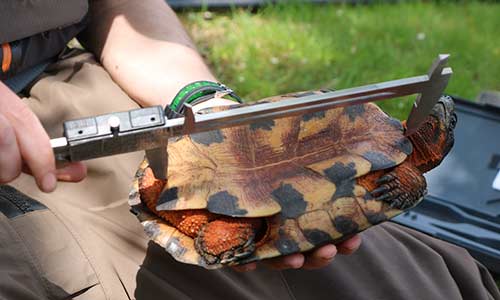
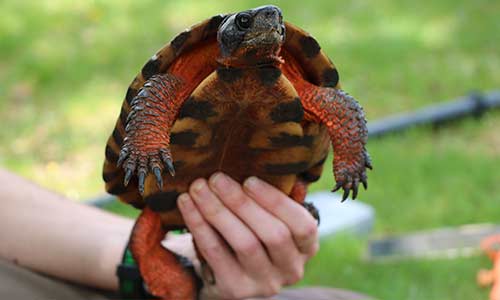
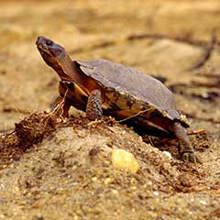
The wood turtle is so-named because its carapace, or top shell, looks like carved wood. These medium-sized turtles grow to about 6–8 inches in length and are found in small populations throughout stream habitats in Massachusetts. Though few hatchlings survive to adulthood, once wood turtles reach maturity they can live to more than 70 years. As adults, wood turtles have few predators but are vulnerable to road casualties, forestry and agricultural activities, streambank development, and pesticide and heavy metal pollution in waterways.
Farms and Forests for Turtles
We're connecting landowners to resources that can help improve their properties for turtles and people alike.
Conservation Blog
Check out the latest turtle tales from our conservation blog.