Zoo New England announces important new conservation initiative in Pakistan
Wednesday February 11, 2026
Zoo New England (ZNE) is excited to announce that it is embarking on a four-year, community-led conservation program aimed at conserving over 3,860 square miles (10,000 square kilometers) of fragile, high-elevation habitat in northern Pakistan. This program is supported with funding from the UK government through the Darwin Initiative.
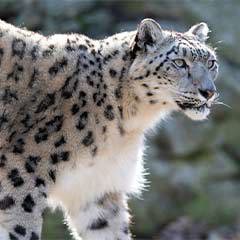
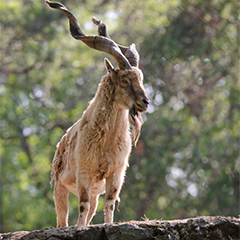
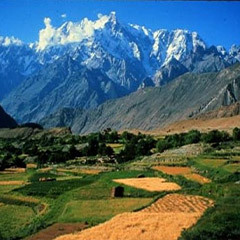 Northern Pakistan is the confluence of some of the greatest mountain ranges in the world – the Himalayas, Karakorams, Hindu Kush, and Pamir mountains – with over 100 peaks soaring over 20,000 feet in elevation. This region also has some of the poorest and most isolated communities in the world, living alongside two of Asia’s most iconic animals – the snow leopard (Panthera uncia) and the markhor (Capra falconeri), the world’s largest wild mountain goat. ZNE’s Stone Zoo is home to both snow leopards and markhor. The markhor was under significant threat of extinction and was rapidly disappearing from the region until a program that was previously supported by ZNE helped establish new community natural resource governance institutions in the region.
This new, four-year program is aimed at ensuring that this fragile and highly biodiverse mountain landscape is protected and conserved in perpetuity. This innovative, ground-up, community led initiative includes the revitalization and support of at least 50 local community natural resource organizations, 20+ multi-community wildlife conservancies, the training and deployment of over 100 community rangers to monitor and protect forests and wildlife, and co-management initiatives between communities and local government agencies. The project’s in-country partners include two local organizations, Pakistan Environment Trust (PET) and the Wildlife Conservation and Development Society (WCDS).
 “Conservation is core to our mission at ZNE, and we are deeply grateful to the Darwin Initiative for their support of this important project, which will have tremendous impact for the people and wildlife that share this mountainous region,” said Peter Zahler, ZNE Director of Field Conservation and the lead for the initiative. “The work will help local communities protect and sustainably manage their wildlife and forests, so that benefits are shared, social equity is promoted, and livelihoods are improved. The community natural resource governance institutions we will be supporting will also better enable long isolated and marginalized mountain communities to have their voices heard and needs met by government agencies that will partner with them through this program.”
Chair of the Darwin Expert Committee, Noëlle Kümpel, shared the following about this round of Darwin projects: “These successful projects are of a particularly high caliber, clearly demonstrating the need for them and the impacts they will have on biodiversity conservation and multidimensional poverty reduction on the ground. I’m particularly pleased that they’re increasingly locally led and addressing issues of equity and inclusivity, helping the fund to enable positive outcomes for and by the people most affected.”
 Besides the markhor and snow leopard, other key wildlife species that the project will focus on protecting and recovering include the highly threatened urial (Ovis vignei), a species of wild mountain sheep, and the endangered, cliff-cave-dwelling woolly flying squirrel (Eupetaurus cinereus), the largest squirrel in the world at 4 feet in length from nose to tail. The project will also focus on protecting the last great conifer forests in the region, which many other wildlife species, important understory plants, and local communities depend upon. A final goal is that at the end of the four-year project, each of the 20+ community-managed conservancies will be given status as formal protected areas in Pakistan.