
Black-Naped Fruit Dove
Ptilinopus melanospilus




About the Black-Naped Fruit Dove
Geographic Range:

Class: Aves
Order: Columbiformes
Family: Columbidae
Genus: Ptilinopuss
Species: melanospila
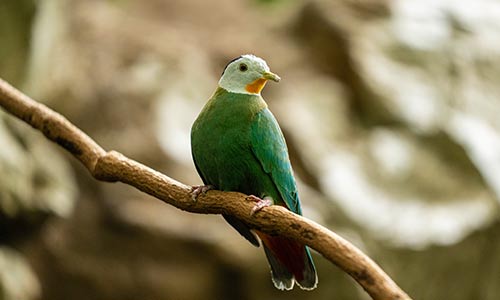
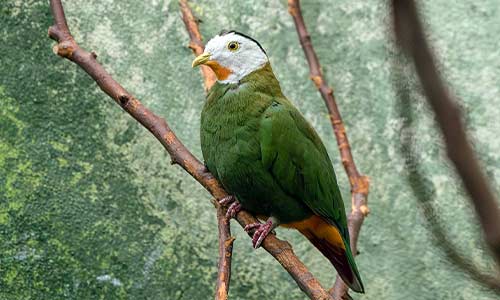
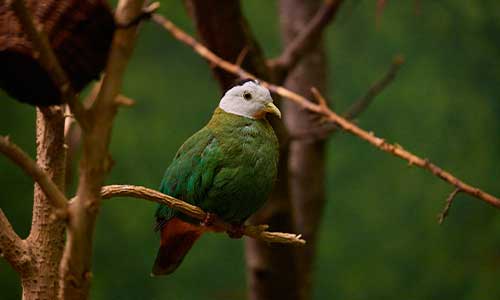
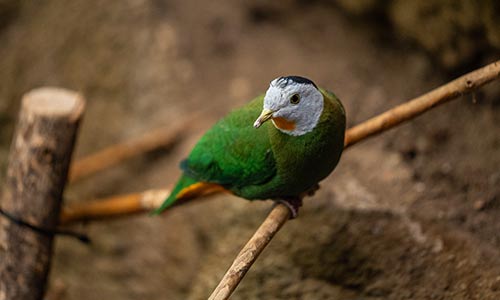
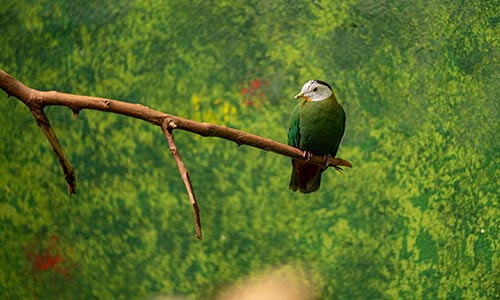
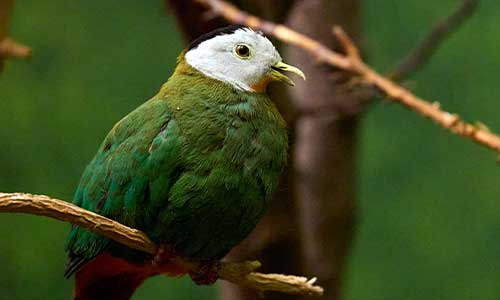
Native to the forests of Indonesia, Malaysia, and the Philippines, these colorful birds are primarily fruit-eaters that help disperse seeds throughout their habitat. Males have gray heads and yellow throats with bright yellow and pink feathers beneath their tails, while females are entirely green. They communicate with a variety of vocalizations and perform elaborate courtship displays before forming monogamous pairs. Their greatest threat is rainforest habitat loss, but choosing products made with certified sustainable palm oil can help protect their future.
You Can Find This Animal in the Tropical Forest
Look Up!
Want to spot this bird? Look up! This dove flies freely through the Tropical Forest.
You Can Help!
Deforestation threatens the habitats of these birds. How can you help? Look in your grocery cart.