White-Bearded Wildebeest
Connochaetes taurinus albojubatus
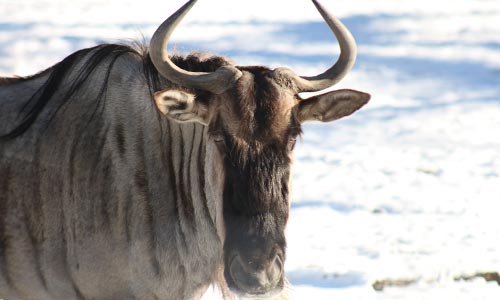
| ⚠️ Animal Alert Wildebeest need to stay indoors and off exhibit if it’s 32 degrees or below and/or icy. Visit our Winter Visits page to learn more about the amazing animals you can see during the winter. |
About the White-Bearded Wildebeest
Geographic Range:
Class: Mammalia
Order: Artiodactyla
Family: Bovidae
Genus: Connochaetes
Species: taurinus
Subspecies: albojubatus
White-bearded wildebeest are powerful antelope known for their large shoulders, grayish-brown coats, and distinctive white beards. They live in herds across central Kenya and northern Tanzania, grazing on short grasses and sometimes gathering in enormous migrations of up to one million individuals! Their calves have an impressive head start on life, learning to run just three to seven minutes after birth.
Wildebeest Facts
Appearance:
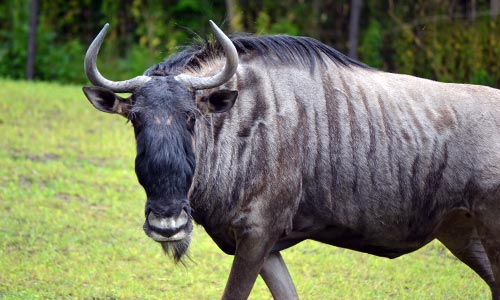
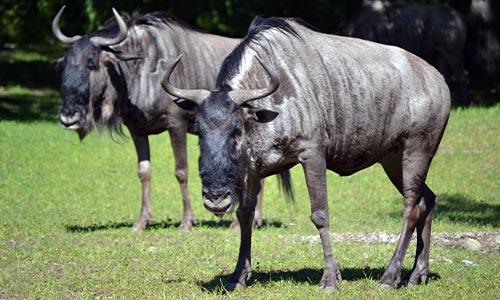
The white-bearded wildebeest is a large antelope with large shoulders and disproportionately smaller hindquarters. They are a grayish brown and, unlike other species of wildebeest, have a white beard. They have slim legs and a large head. Both genders have horns, though the females have slimmer horns.
Size:
Weight: 300 to 600 pounds
Height: Up to 4 feet 7 inches at the shoulder.
Diet:
White-bearded wildebeest eat short grasses but will eat taller grasses in the dry season.
Reproduction:
White-bearded wildebeest mating occurs in June and July.
Gestation:
After a gestation period of 240 to 255 days, a single calf is born. Unlike other antelope, the wildebeest does not find a secluded spot to give birth. Eighty percent of all calves are born within the first two to three weeks of the wet season (February and March) to overwhelm potential predators. Calves are able to run within three to seven minutes after birth and begin eating grass when 10 days old, although they still suckle for up to six months. Male sexual maturity is reached after three to four years. Female sexual maturity is reached after 2.5 years.
Behavior:
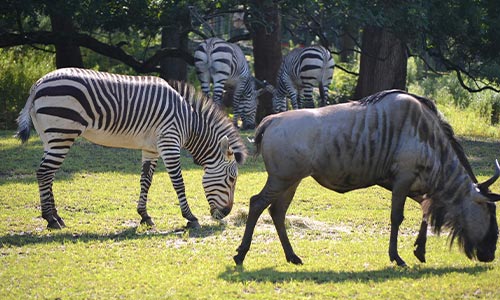
Male white-bearded wildebeest leave the herd when mature and form bachelor groups before eventually establishing a territory. Females generally remain with the herd. When searching for food, wildebeest may amass a large migration herd of up to 1 million individuals. Up to half a million zebras and Thomson's gazelles can follow the great wildebeest migration.
Habitat/Range:
White-bearded wildebeest live in a wide variety of habitats including short grass plains, woodlands, and at the edge of savannahs and open bushland. They range throughout central Kenya and northern Tanzania.
Median Life Expectancy:
Males: 8.3 years
Females: 14 years
Threats:
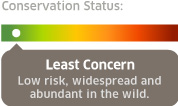
White-bearded wildebeest are a species of Least Concern.
You Can Find This Animal in the Serengeti Crossing
Survival Strategy
Wildebeest can gather in herds of thousands for protection from predators like lions, hyenas and wild dogs. When the dry season arrives, these massive herds can travel dozens of miles in a single day in search of fresh grass and water.

You might also like
At Franklin Park Zoo:
At Stone Zoo: