Skip main navigation
Close menu

Gouldian Finch

Chloebia gouldiae
  • Gouldian finch
  • Gouldian finch
  • Gouldian finch
  • Gouldian finch
  • Gouldian finch
  • Gouldian finch
  • Gouldian finch
  • Gouldian finch
  • Gouldian finch

About the Gouldian Finch
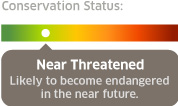
conservation status: near threatened

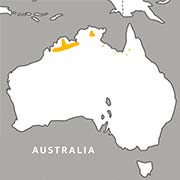
Geographic Range:

range map

Class: Aves
Order: Passeriformes
Family: Estrildidae
Genus: Chloebia
Species: gouldiae

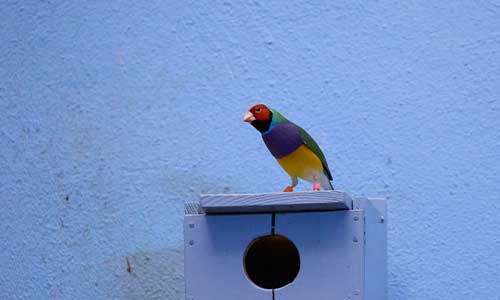
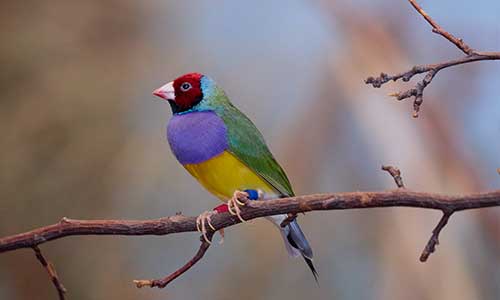
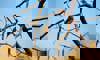
Gouldian finches are tiny birds with a spectacular rainbow of colors, earning them the nickname “rainbow finches.” Native to the savannahs and woodlands of northern Australia, these birds spend much of their time foraging on the ground for grass seeds, but nest in tree hollows. Males put on colorful courtship displays by bobbing their heads and ruffling their feathers, and after mating, both parents share the work of incubating their eggs and raising chicks. Gouldian finches communicate through soft trills, chirps, hisses and clicks and, despite their brilliant appearance, are generally quieter than many other finch species. 

Gouldian Finch Facts

Appearance:

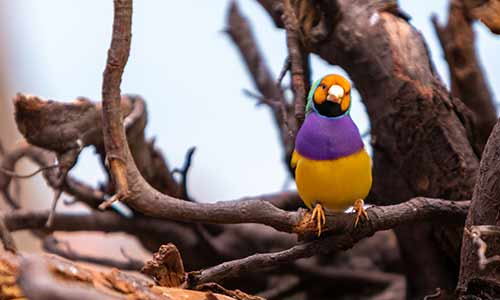
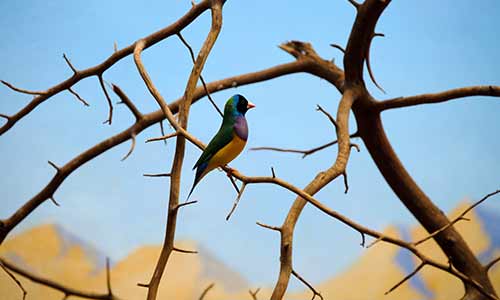
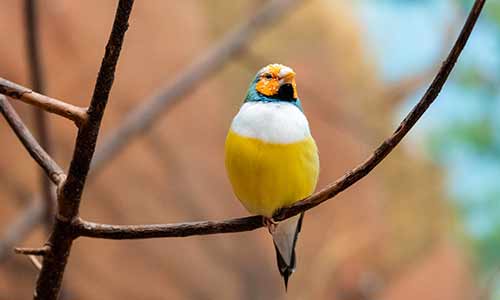
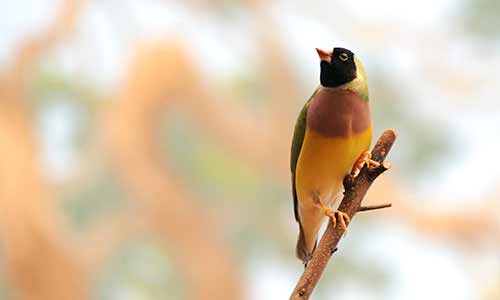
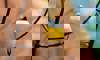
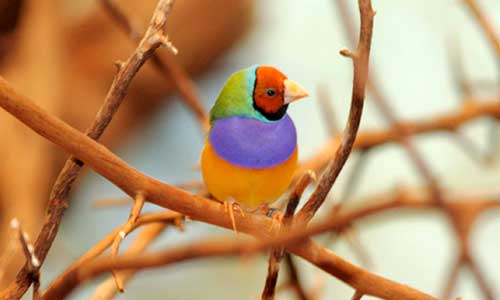
Gouldian finches are small, vividly-colored birds. Adults weigh 14-15 grams. Their necks are a light green, their backs and wings are a blueish color, and the sides of their bodies and abdomens are yellow. Three distinct color variations exist, with individuals having either a red, black, or yellow head. Males have bright purple breast feathers, but females are a lighter, pale purple. Both males and females have a turquoise-colored band around their head.

Diet:

Seeds, particularly grass seeds. 

Reproduction:

Males court females by bobbing their heads and ruffling their feathers to show off their colors to females. After mating, a female will lay four to eight eggs. Both parents help incubate the eggs and raise the chicks once they’ve hatched. Chicks hatch without any feathers, but start growing them around 12 days of age.

Behavior:

Gouldian finches are generally not as noisy as some other species of finches. They communicate via trills, chirps, hisses and clicking sounds. They forage for seeds on the ground, but lay their eggs in tree holes.

Habitat/Range:

Found in the savannah and woodlands of Northern Australia.

Median Life Expectancy:

5 years