
Hamerkop
Scopus umbretta
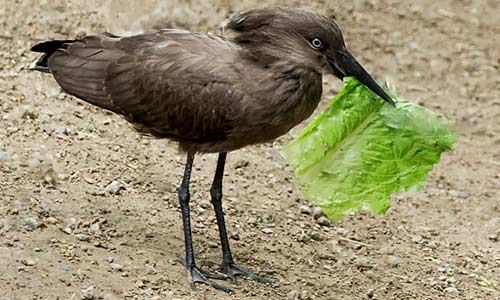
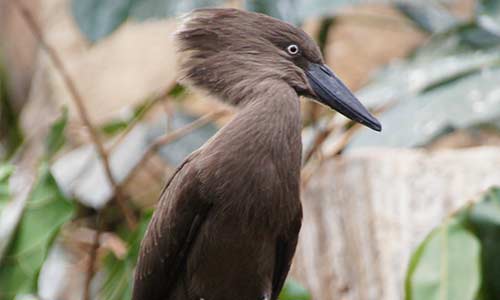
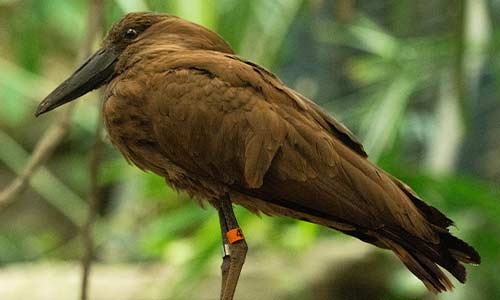


About the Hamerkop
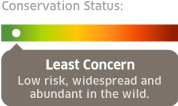
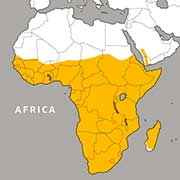
Geographic Range:
Class: Aves
Order: Pelecaniformes
Family: Scopidae
Genus: Scopus
Species: umbretta
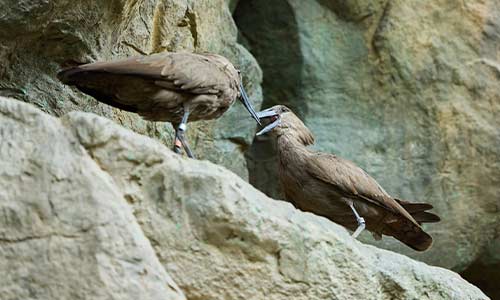
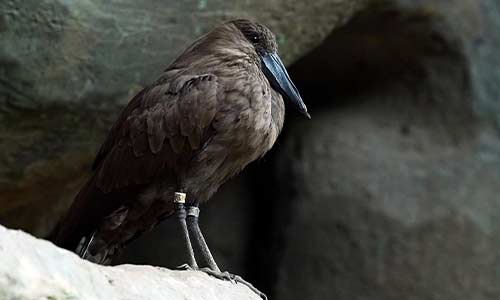
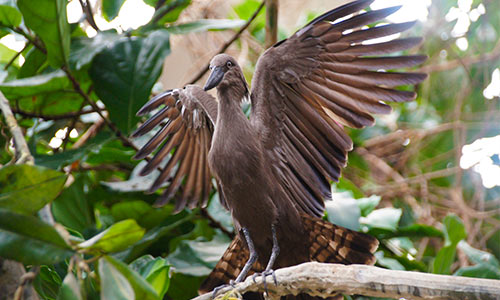
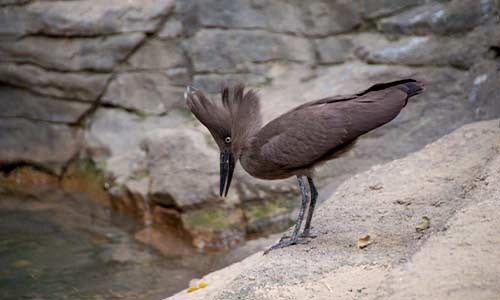
Named for their distinctive hammer-shaped heads, hamerkops are remarkable birds found throughout sub-Saharan Africa and Madagascar. They're best known for building the largest domed nests of any bird—massive structures that can weigh up to 55 pounds and are made from sticks, vegetation and even colorful objects. Hamerkops forage in shallow water for fish, frogs and other small prey, sometimes spreading their wings to create shade that helps attract fish within striking distance. So unique are these birds that they belong to their own family, the Scopidae.
You Can Find This Animal in the Tropical Forest
Committed to Conservation
Zoo New England participates in the hamerkop Species Survival Plan. By sharing research and knowledge, participating institutions work together to establish guidelines that best ensure the health of captive populations, and with success, the survival of endangered species.
Look Up!
Want to spot this bird? Look up! Hamerkops fly freely through the Tropical Forest.