Appearance:
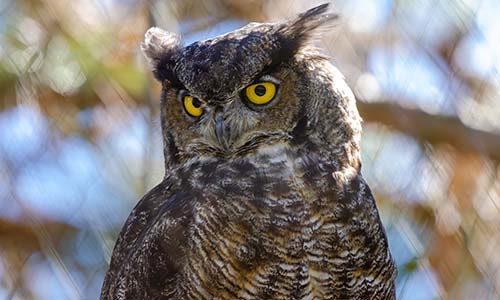
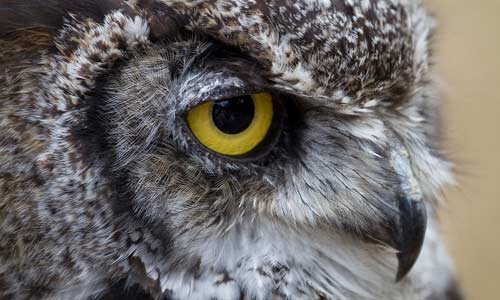
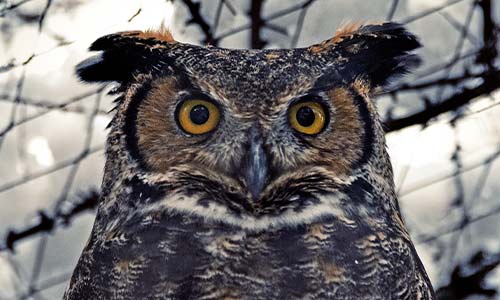
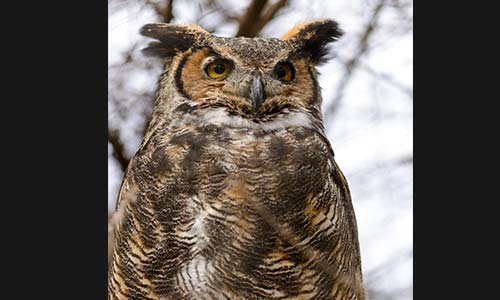
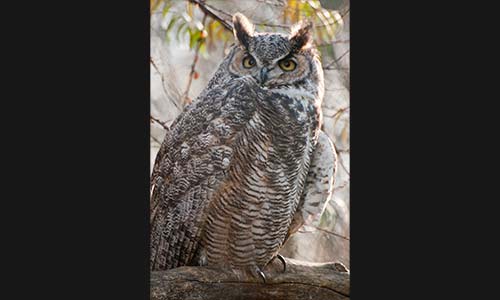
The great horned owl is the second largest owl in the Americas, second only to the great gray owl. These owls gets their name from the feather tufts (plumicorns) on their head that resemble ears, though their ears are actually further down on the side of their head. They have white patches on their ears and throat, and their facial disc is outlined in black. The edges of their wing feathers are soft and fluffy, making these owls nearly silent in flight and able to swoop down on unsuspecting prey. Their large, powerful talons help them grab and tear flesh.
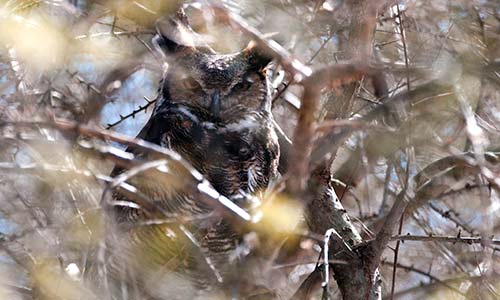
These birds can rotate their head 270 degrees, which greatly improves their visual range. In their northern range, these owls are larger and paler, whereas in more humid climates they're smaller and darker. This coloration camouflages them. Ear tufts improve hearing and aid in camouflage.
Size:
- Height: 18-25 inches
- Weight: 3–4.5 pounds
- Wingspan: 36–60 inches
Diet:
In the wild, these nocturnal owls primarily hunt for mammals such as rabbits, skunks, mice and voles. They will prey upon birds as large as geese in addition to reptiles and amphibians. They have been known to take down prey two to three times larger than themselves, and will also eat other Great Horned owls.
Reproduction:
These owls are diverse in their nesting habits. They occupy nests of other birds or they may nest on ledges, in tree hollows, abandoned buildings, or depressions on the ground. Breeding season spans the months of December through July, after which incubation lasts for a period of 30-35 days by both parents. Nests usually consist of between one and five eggs, and chicks fledge after nine to ten weeks after hatching.
Median Life Expectancy:
Between 13 and 20 years on average
Habitat/Range:
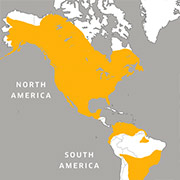
Great horned owls can be found in nearly every habitat except for tropical forests. They prefer open areas with access to tree perches. They range from as far north as central Alaska to South America, excluding the Amazon.