
Emerald Tree Boa
Corralus caninus


About the Emerald Tree Boa
Geographic Range:

Class: Reptilia
Order: Squamata
Family: Boidae
Genus: Corralus
Species: caninus
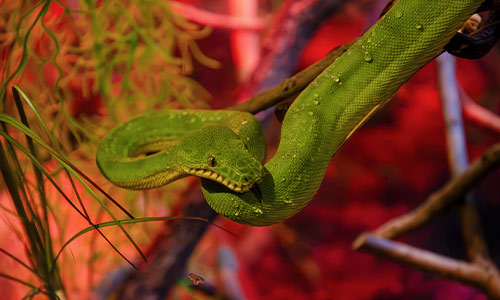
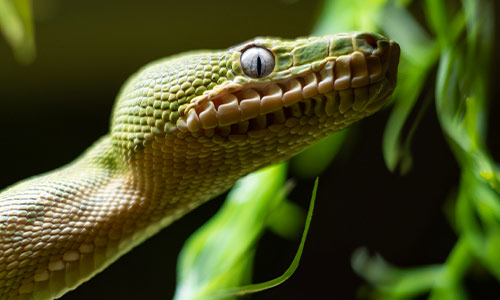
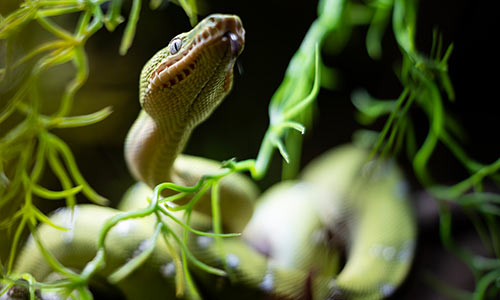
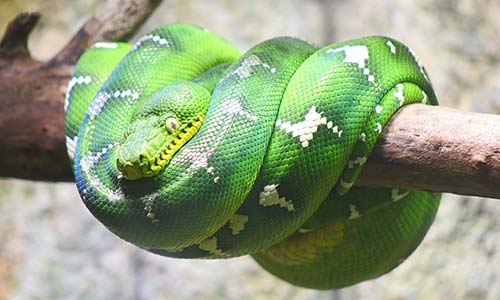
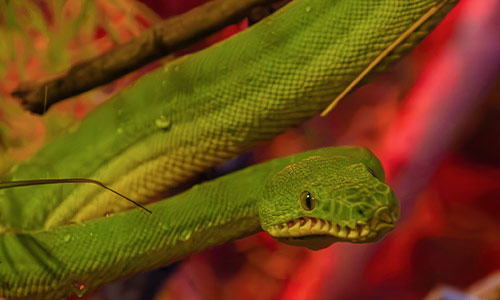
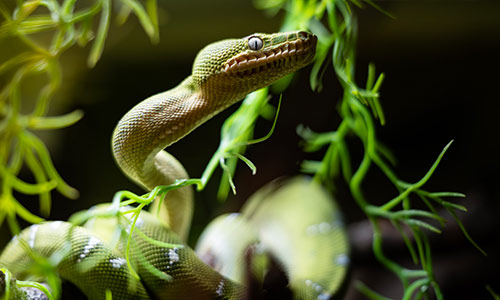
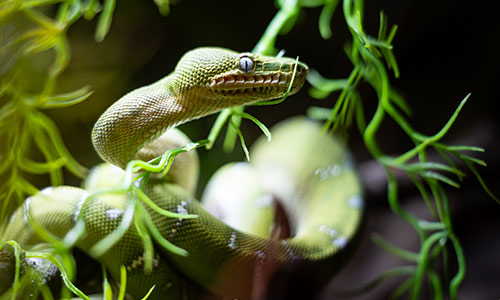
Emerald tree boas start life with bright red or orange coloring, which shifts to green within their first year. They have the largest front teeth (proportionally) of any non-venomous snake and use their prehensile tails to anchor themselves in trees. Nocturnal ambush predators, they coil on branches by day and extend their heads downward at night to catch prey. Solitary outside of breeding, females give birth to live young every two years. Native to northern South America, they thrive in the rainforests’ dense canopies.
You Can Find This Animal in the Tropical Forest

Fangtastic Fact
Emerald tree boas have the biggest front teeth (proportionally) of any non-venomous snake!
From the blog: Snakes
Explore our Conservation blog for news on snakes, reptile conservation and the species inspiring people to protect wildlife.