
Reeves's Muntjac
Munticus reevesi
| ⚠️ Animal Alert Our muntjac is temporarily behind the scenes during habitat updates. |
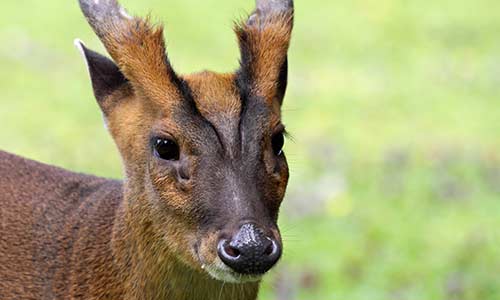
About the Reeves's Muntjac
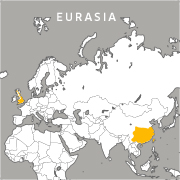
Geographic Range:
Class: Mammalia
Order: Cetartiodactyla
Family: Cervidae
Genus: Munticus
Species: reevesi
Small but distinctive, muntjacs are slender deer that live alone or in pairs and rarely stray far from their territories. Males have small antlers and sharp, tusk-like teeth, while both males and females have unusual scent glands on their faces. Sometimes called “barking deer,” muntjacs make a surprisingly dog-like warning call. They feed on leaves, fruit, bark and fungi and can be found throughout parts of Southeast and East Asia.
You Can Find This Animal in the Children's Zoo
Deer or dog?
Muntjacs are known as “barking deer” because their loud, rhythmic alarm call sounds surprisingly similar to a dog’s bark!
Committed to Conservation
Zoo New England takes part in the Reeves’s muntjac Species Survival Plan. This program brings zoos together to share research and expertise, create care guidelines, and help ensure the health of populations and the survival of species.