Appearance:
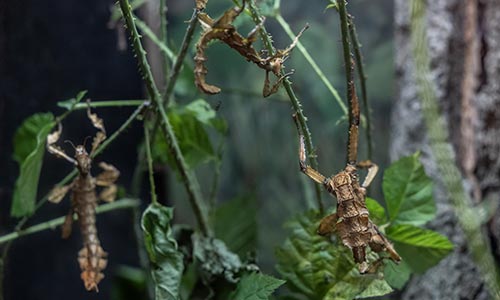
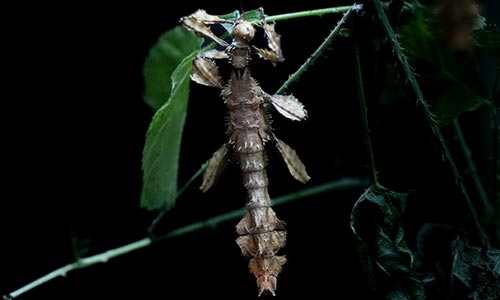
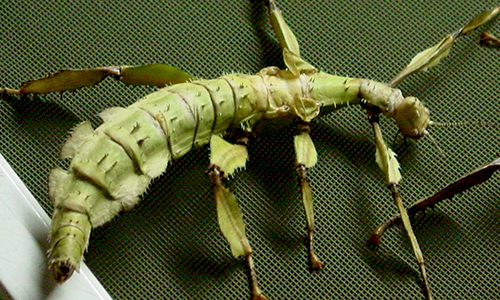
The giant prickly stick insect is a large, light brown insect that closely resembles a leaf or twig, providing excellent camouflage in its natural habitat. Its curled abdomen resembles a scorpion's tail, but unlike a scorpion, it has no stinger. Claws and suction pads on its feet help it climb with ease. Males have wings and are capable of flight, while the larger, wingless females are equipped with spiny projections on their legs and abdomen that help deter predators.
Size:
Male: 3-4 inches long
Female: 4-5 inches long
Diet:
Primarily eucalyptus leaves
Reproduction:
Giant prickly stick insects breed year-round and can reproduce either sexually or asexually. When a male is present, he locates a female by following her scent before mating. Females are also capable of reproducing without a mate, a process called parthenogenesis. Eggs produced this way take longer to develop, and all of the offspring are female.
A female can lay up to 1,000 eggs during her lifetime. Fertilized eggs typically hatch after four to eight months, while unfertilized eggs produced through parthenogenesis hatch in about nine months. Once hatched, young stick insects reach sexual maturity in approximately four months and are then able to reproduce themselves.
Behavior:
Look closely among the branches to spot this arboreal, nocturnal insect. Giant prickly stick insects are masters of camouflage, using their leaf-like appearance to blend seamlessly into their surroundings. They often curl their abdomens to resemble dry, dead leaves and gently sway back and forth like branches moving in the breeze, making them even harder for predators to detect.
If threatened, adult giant prickly stick insects can release a strong-smelling odor as a defense, though they rely primarily on their remarkable camouflage for protection. Despite their impressive disguise, they are still preyed upon by bats, birds and reptiles.
Role in their habitats:
Prickly sticks are herbivores, but they’re preyed upon by small rodents, reptiles and birds.
Habitat/Range:
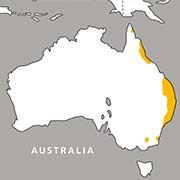
These leafy insects live in tropical forests throughout northern Australia and also Papua New Guinea.
Life Expectancy:
10-12 months
Fun fact:
Their Latin name means “ghost” in reference to their excellent camouflage abilities.