Appearance:
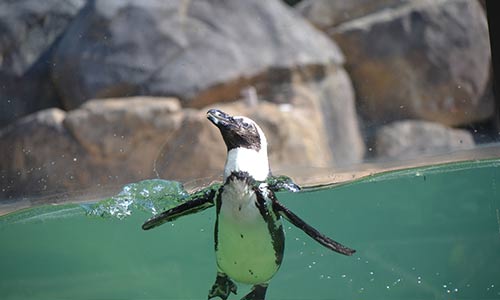
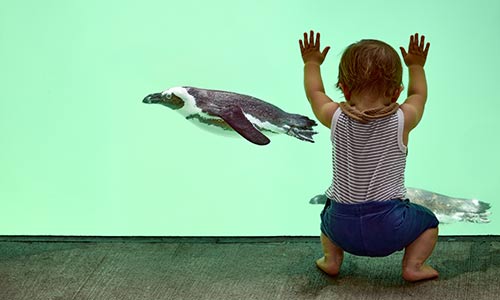
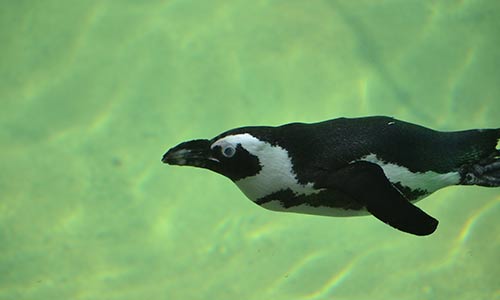
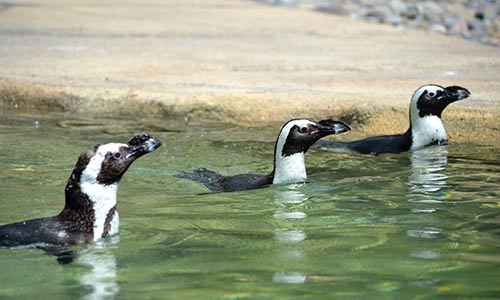
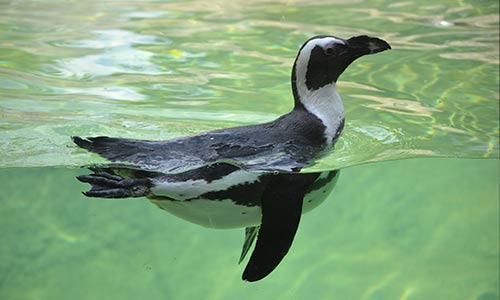
African penguins are among the smaller penguin species and, like all penguins, are flightless. They use their flipper-like wings to propel themselves through the water with remarkable speed and agility. Their streamlined, torpedo-shaped bodies reduce drag, while specialized plumage keeps them both dry and warm. A dense outer layer of stiff, waterproof feathers repels water, and a soft underlayer of down traps heat close to the body. Their distinctive coloration also serves a practical purpose. Their dark backs blend with the ocean depths when viewed from above, while their white undersides merge with the bright surface when seen from below, providing effective camouflage while swimming.
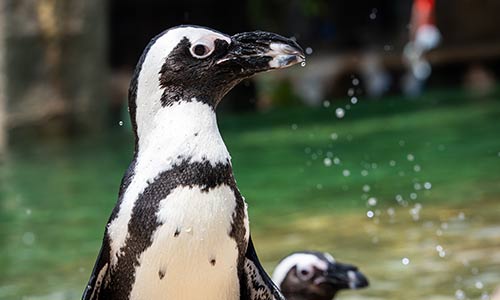
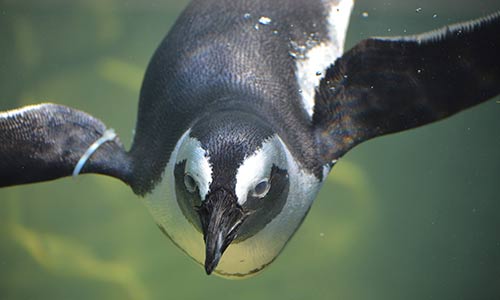
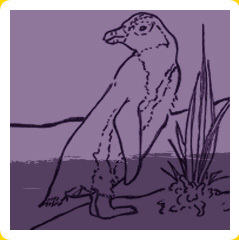
They are most closely related to other banded penguins in the genus Spheniscus, including the Humboldt, Magellanic, and Galápagos penguins. African penguins have sharply pointed beaks, black feet, and distinctive facial markings, along with a bold black band across the upper chest. Their chests are often marked with scattered black spots, and these patterns are unique to each individual, much like a human fingerprint. Males can often be distinguished by their slightly longer, thicker bills.
Adapted to life in a warmer climate, African penguins have bare pink patches of skin above their eyes that help regulate body temperature. Blood circulating through these areas releases excess heat, helping them maintain a stable body temperature.
Size:
Male penguins are slightly larger and heavier than females on average.
- Height: 24 to 27 inches
- Weight: 6 to 8 pounds
Diet:
Small schooling fish, such as sardines and anchovies, as well as squid and small crustaceans.
Reproduction:
Penguins are sexually mature at around 4 to 6 years of age. Breeding season can occur year-round, but their peak breeding season is from February through August, with timing varying by colony and local food availability. Birds can often be observed mating with the same partner for many years, forming long-term pair bonds.
A female’s clutch typically consists of one or two eggs. Under good conditions, a pair may raise one brood per year, and occasionally two if food availability is high. Both parents share incubation and chick-rearing duties, with chicks typically fledging around 70–90 days of age. Despite this potential, breeding success is often low in the wild due to limited food resources, disturbance and environmental stressors.
Behavior:
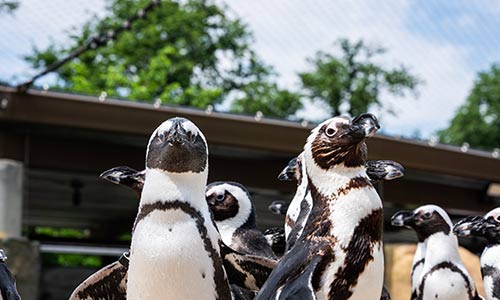
These highly social birds live and breed in large colonies, sometimes numbering in the thousands. These colonies provide protection, social interaction, as well as access to nesting sites.
Juveniles typically disperse from their natal colony at about 1 - 2 years of age. During this period, young penguins may travel hundreds of miles along the coast before returning to a breeding colony once they reach sexual maturity (around 4 - 6 years of age). Some individuals will return to their birth colony, while others settle at new colonies depending on food availability and habitat conditions.
Habitat/range:
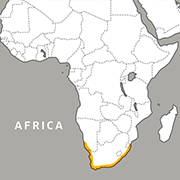
African penguins live along the coastal regions of southern Africa, primarily along the shores of South Africa and Namibia, where they prefer rocky coastlines, sandy beaches, and offshore islands for nesting and resting.
Median Life Expectancy:
- In the wild: Typically 10 years, with many individuals not surviving to adulthood due to predation, food shortages and environmental threats.
- In human care: Often 20 - 30 years, with some individuals living into their 40’s thanks to consistent food, veterinary care and protection from predators.
Threats:
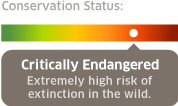
Overfishing and climate change reduce the availability of sardines and anchovies, forcing penguins to travel farther in search of food. Oil spills and pollution can damage their waterproof feathers, while coastal development and human disturbance limit safe nesting areas. As colonies shrink, eggs and chicks become more vulnerable to predators, and disease and environmental toxins further threaten their survival, together contributing to a severe population decline.