Zoo New England leading project to add new plantings across Dorchester and Roxbury as part of urban greening initiative
Wednesday October 28, 2026
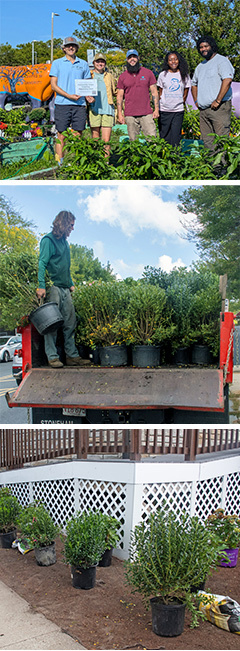 This fall, Zoo New England’s (ZNE) Horticulture team has planted approximately 400 trees and shrubs across 16 sites in Dorchester and Roxbury as part of its urban greening initiative.
This innovative initiative is helping bring more trees and green space to neighborhoods that need them most—expanding tree canopy, reducing the urban heat island effect, improving environmental and community health, and advancing environmental equity. Plantings took place throughout September and October. Community planting days brought Zoo staff and volunteers together with local partners to prepare each site and help put new plants in the ground. Planting sites included neighborhood gardens, community centers, health clinics, and affordable housing communities in Dorchester and Roxbury.
At each site, ZNE’s horticulture team worked directly with community partners to create a personalized planting plan based on their unique needs and goals, including a proposed planting sketch to help bring their vision to life. This fall’s plantings included flowering cherries, eastern redbuds, dogwoods, viburnums, chokeberries, oakleaf hydrangeas, native hollies, and more.
“We are really excited about this work, and the long-term benefits that this will yield,” said Joshua Meyer, ZNE Curator of Horticulture and Sustainability. “This work would not be possible without the collaboration of our partners and members of the community, and we are grateful for their support.”
These plantings are part of the Partnership for Greening Dorchester & Roxbury (PGD&R), a three-year initiative supported by Liberty Mutual Insurance through its Foundation’s Climate Resiliency Initiative. Program partners include Harvard Street Neighborhood Health Center (HSNHC), Boston PowerCorp (BPC) Greater Grove Hall Main Street, Neighborhood Forest, and the Price Center. Now in its second year, the project’s goal is to plant approximately 2,000 trees and shrubs in Dorchester and Roxbury over three years.
Both Dorchester and Roxbury are “urban heat islands,” with fewer trees, less carbon-rich green space, and a greater concentration of impervious surfaces than many other Boston communities. Over the course of the project, the new plantings are expected to create 2–4 acres of additional tree canopy, generate 23 tons of oxygen, store 9 tons of carbon, and move more than 47,000 gallons of water from the soil into the atmosphere, helping to mitigate the effects of urban heat. For each project site, planting data is entered into the USDA Forest Service’s i-Tree-Eco software to calculate ecosystem services such as air pollution removal, carbon storage and sequestration, and building energy effects. The economic value of plants added to each site is also calculated.
Beyond planting, the program is also creating opportunities to learn about urban greening, explore career pathways, and gain hands-on experience in green jobs for unemployed and underemployed youth and adults who are often underrepresented in these fields.
The grant also supported the installation of a 2,400-square-foot greenhouse on the grounds of Franklin Park Zoo, where plants for the project are grown and nurtured. The greenhouse will offer another place for participants to learn and build skills, with hands-on experience in potting, growing, watering and caring for the plants that will eventually take root throughout Dorchester and Roxbury.