
Zoo New England, MassWildlife, and U.S. Fish & Wildlife service release historic second-generation Blanding's turtles
Monday June 29, 2026
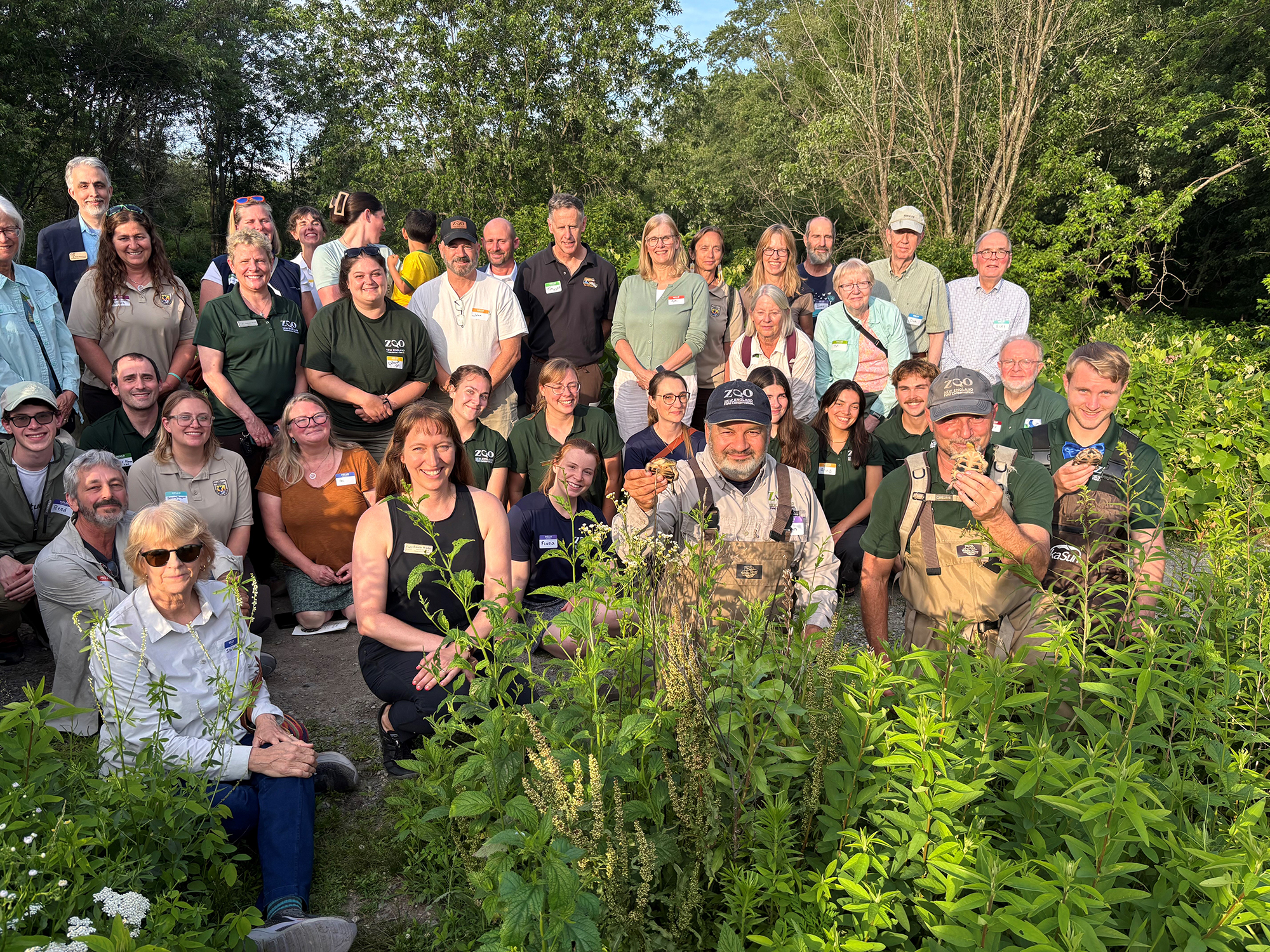 Zoo New England, the Massachusetts Division of Fisheries & Wildlife (MassWildlife), and the U.S. Fish & Wildlife Service celebrated a historic milestone in wildlife conservation on the evening of June 25, 2026, at Great Meadows National Wildlife Refuge in Concord, Massachusetts. The organizations gathered with donors, conservation partners, and supporters to release two Blanding's turtle hatchlings into the wild, marking a generational turning point in the decades-long effort to recover this state-listed threatened species in Massachusetts. The event also honored Dr. Bryan Windmiller, founder of ZNE's Blanding's turtle conservation program at Great Meadows National Wildlife Refuge, whose more than two decades of leadership made this moment possible.
The two released hatchlings are the offspring of Blanding's turtle #144, nicknamed "Ivy,” making them the first confirmed second-generation offspring of the Great Meadows National Wildlife Refuge Blanding's turtle conservation program, which began in 2003. Their hatching and release represent a critical milestone toward establishing a self-sustaining, recovered population of this state-listed species.
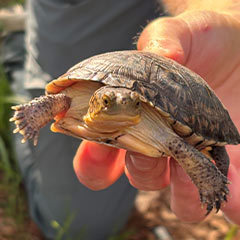 ZNE's HATCH (Hatchling and Turtle Conservation through Headstarting) program lies at the heart of this work. Headstarting is a conservation technique in which turtles are raised in captivity to give them an advantage to surviving into adulthood. Through headstarting, ZNE has given more than 1,400 Blanding's turtles a fighting chance at adulthood. The process begins when turtle hatchlings are removed from the wild in early fall and given to partnering schools to raise in a warm aquarium environment with unlimited food before they’re released back into the wild the next spring. This method greatly accelerates the growth of the turtles and reduces the likelihood of death from predators during a turtle’s first year of life when they are most vulnerable. This gives each turtle a "head start" at life. Headstarted turtles have a 40 times greater chance of surviving to adulthood than their wild counterparts. Since 2009, more than 22,000 students from Massachusetts K–12 schools have headstarted rare turtles in their classrooms. Ivy's other hatchlings were raised in local classrooms and released by those students this past spring.
Ivy's own story began in 2010, when her mother traveled over 1.2 miles from the wetlands of Great Meadows to nest at a nearby office park. That nest produced 11 hatchlings, including a single female weighing just seven grams. That female, Ivy, spent 10 months in the care of Stone Zoo's animal care staff before being released into the wild in 2011, where she remained unseen for over a decade.
In 2023, Ivy was rediscovered during a routine monitoring survey, having grown to full adult size. On June 25, 2025, ZNE Senior Field Conservationist Jimmy Welch stood watch through the night as Ivy dug a nest in a protected wildflower meadow and laid eight eggs beginning at 2:30 a.m. Seven of those eggs hatched successfully that fall and were raised in local classrooms through ZNE's HATCH program. They were released back to the wild exactly one year after their mother laid them.
 "Every year, we protect nests and release headstarted turtles to help restore these threatened turtle populations. But the goal is to have the population become self-sustaining, and that can only happen when the next generation start laying eggs of their own," said Welch. "This release represents the fulfillment of that goal — living proof that our work is having a lasting impact."
“This is an important landmark for Blanding’s turtle conservation in Massachusetts,” said Mike Jones, State Herpetologist for MassWildlife. “These turtles face complex challenges in our modern landscape, and their recovery depends on creative, persistent partnerships. The release of these second-generation turtles is proof that long-term collaboration among Zoo New England, U.S. Fish and Wildlife Service, MassWildlife, schools, and the local community is making a lasting difference for this threatened species.”
“This exciting milestone is a testament to the power of collaborative conservation,” said Grace Bottitta, project leader for the U.S. Fish and Wildlife Service’s Eastern Massachusetts National Wildlife Refuge Complex. “We’re grateful to our partners and neighbors for their commitment to this at-risk species, and proud Great Meadows National Wildlife Refuge provided the setting for this conservation success story as a safe haven for Blanding's turtles.”